StartUp Fair @the Kinney
Booth 219
Anikoon · Paul Choate · Donghwan Kim
Dohwa Kim · Suyeon Lee · Adam Umbach
Feb 27 - Mar 01, 2026
737 Washington Blvd, Venice, CA
VIP Preview
FEB 27 FRI 4 — 7 PM
General Admission
FEB 27 FRI 7 — 10 PM
FEB 28 SAT 12 — 9 PM
MAR 01 SUN 12 — 7 PM
Free shuttles provided between FRIEZE LA and the Kinney Hotel.

ARTISTS
Inquiries: brett@jakupsil.com | +1 215 906 5200
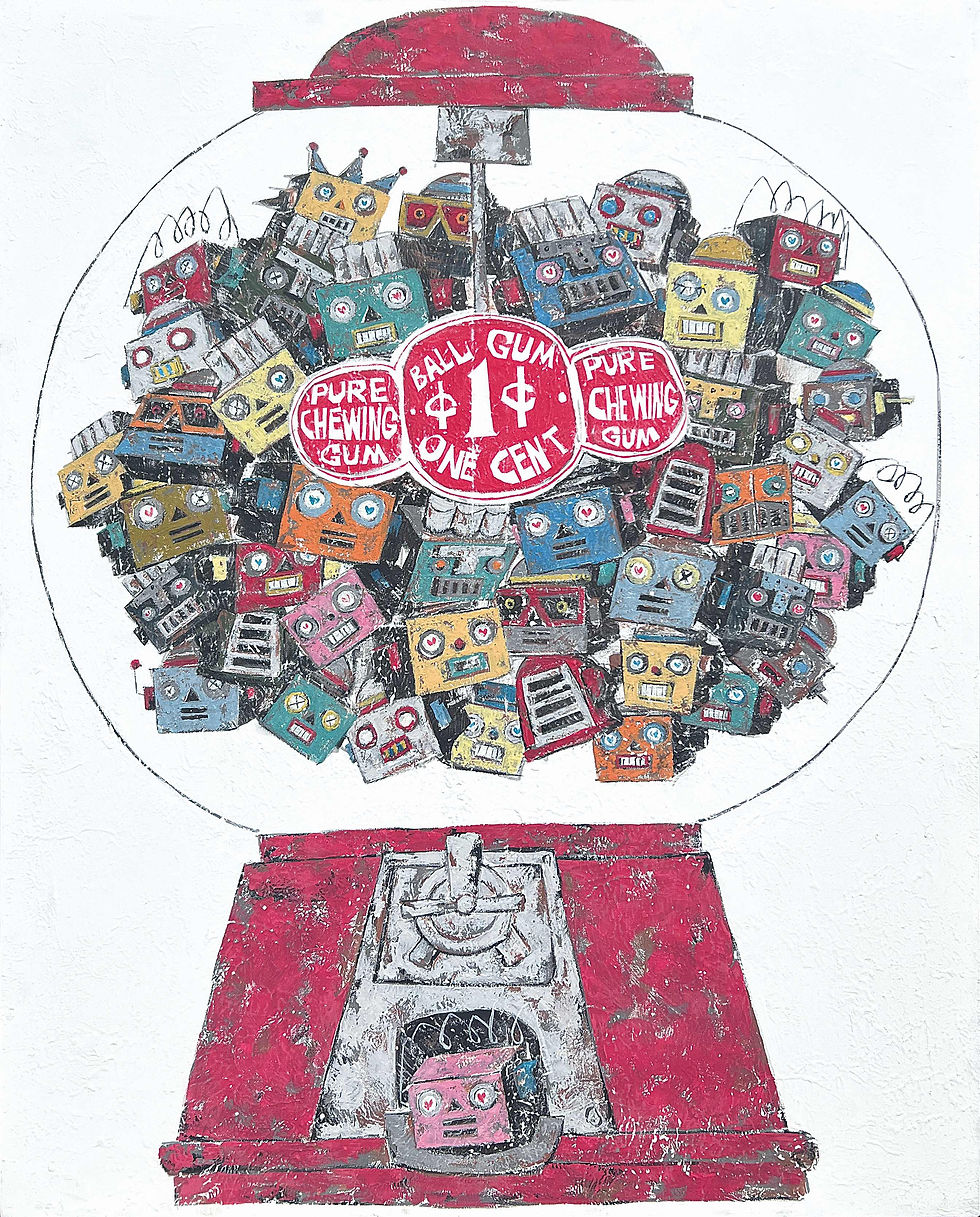
> Anikoon examines contemporary identity and human connection through the metaphor of robots. Moving away from sleek, high-tech representations, his robots appear deliberately awkward and vulnerable, displaying expressions ranging from playful bewilderment to profound melancholy. This exhibition showcases his acclaimed robot series alongside new works inspired by American consumer culture, incorporating iconic brands like McDonald's, Coca-Cola, and Air Jordan. Through these mechanical intermediaries, Anikoon explores how we wear multiple masks in life and the possibilities for genuine connection when inner voices meet authentically.
> Dohwa Kim is a ceramic artist whose practice embraces ceramics, painting, and other media in a fluid interplay of form, color, and texture. A pivotal moment in her artistic development came with her first pilgrimage along the Camino de Santiago. The journey, and the ten that followed, reshaped her perspective and deepened her commitment to a contemplative, process-driven practice. The landscapes, silences, and encounters along the way continue to inform her approach to material and form. Her work reflects an openness to change, and the quiet possibilities found in unexpected turns.
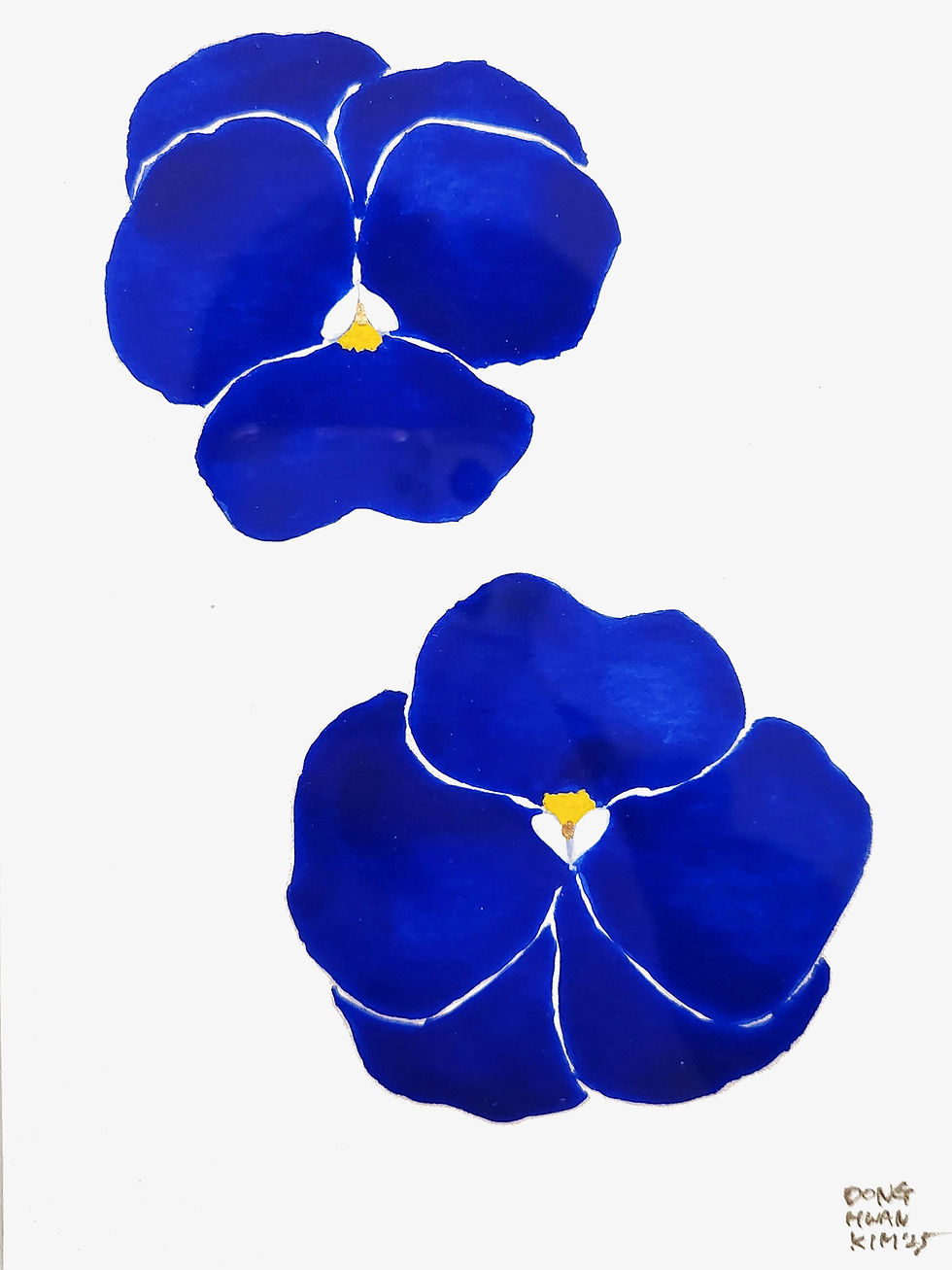
> Donghwan Kim's recent paintings center on the pansy—an omnipresent flower in Korea, frequently overlooked precisely because of its abundance. Kim was initially drawn to the pansy for its chromatic duality: the tension between its dark core and luminous petals. This interplay of shadow and radiance unfolds as a metaphor for human complexity—an insistence that identity resists singular definition. The flower’s secondary connotation, historically associated with weakness or effeminacy, further deepens the inquiry. Rather than reject the term, Kim reclaims it, aligning vulnerability with resilience and reframing marginality as latent strength.
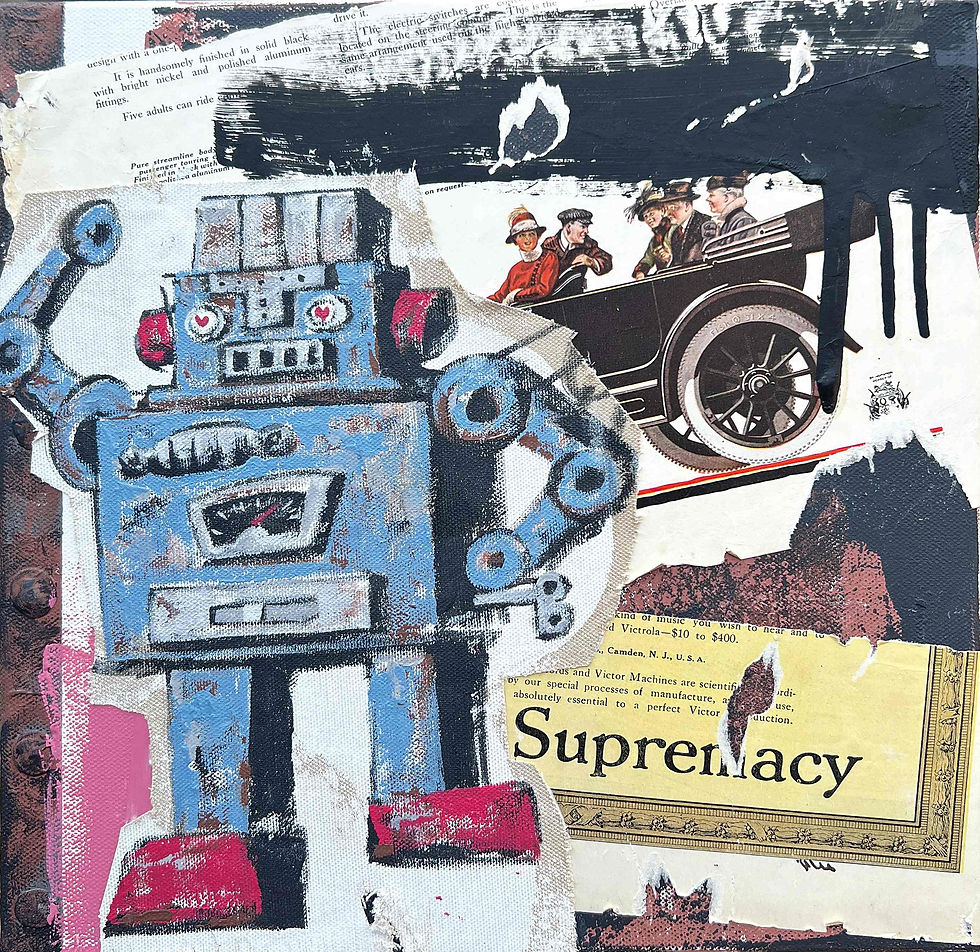
> Paul Choate has dedicated his artistic career to exploring the evolution from manual craft to technological automation. His work examines how advanced technologies like AI and robotics can enhance rather than replace artistic expression. Using machines as creative partners, Choate creates pieces emphasizing the challenges of producing tangible art through mechanical means while offering a critique of humanity's tendency to overcomplicate reality. His pieces in the exhibition demonstrate how the fusion of human creativity with machine precision can reveal new artistic possibilities.
> Adam Umbach creates works that serve as powerful acts of remembrance, transforming everyday objects into portals of memory and emotional resonance. His precisely rendered butterflies, lighthouses, and childhood objects float in dreamlike color fields, evoking nostalgia and existential isolation. Umbach's paintings juxtapose meticulous photorealistic depictions with expressive marks made with his non-dominant hand, creating a contrast that recalls the thrill of artistic discovery familiar from childhood. His work invites viewers to project their own memories and associations, making each encounter deeply personal.
> Suyeon Lee works in the tradition of minhwa, advancing its symbolic vocabulary through technical and compositional clarity. Her recent paintings revisit key motifs including hwajodo (birds-and-flowers), chaekgado (books-and-scholarly objects), pachodo (banana plants), hwajeopdo (flowers and butterflies), and varied floral compositions. Historically associated with prosperity, scholarly virtue, longevity, fertility, and harmony between cultivated and natural realms, these subjects are rendered with disciplined brushwork and calibrated color. Lee balances ornament with structure, surface richness with spatial order, reaffirming the formal sophistication of folk aesthetics while situating minhwa within a contemporary painterly discourse.
WORKS ON VIEW